The Art of Paradise: A Guide to the World of Persian Gardens
In a land often defined by its stark deserts and rugged mountains, Persian gardens emerge as an astonishing testament to human ingenuity and a profound love of beauty. These are not merely green spaces; they are living masterpieces of design, a symbol of harmony, a refuge from the sun, and a spiritual sanctuary. A visit to these tranquil oases is to step into a meticulously crafted world that contrasts dramatically with the outside environment, offering a glimpse into a philosophy of order and paradise. This article is your definitive guide to Persian gardens, an invitation to explore a living art form that has captivated and inspired for millennia.
The history of Iranian gardens is deeply intertwined with the country's identity, reflecting a civilization's desire to create beauty and order in a challenging climate. The concept of the garden as a symbol of paradise (pardis in Persian, the root of the English word) has been a central theme in Persian culture for thousands of years. From the Achaemenid era to the present day, these spaces have served as places for contemplation, social gatherings, and a respite from the stresses of urban life.
Their unique design principles, from the use of geometry to the central role of water, make them a truly special category of Iran Attractions. This comprehensive guide will take you through their history, their key features, and why they remain among the most significant Iran Attractions and Persian gardens in the world.
List of Famous Persian Gardens (0)
What is a Persian Garden? An Introduction to its Defining Parameters
A Persian garden is far more than a simple collection of plants and flowers; it is a profound and living work of art that embodies a spiritual and philosophical worldview. At its core, it is a meticulously planned oasis, a self-contained world designed to provide a refuge from the arid environment outside its walls. The concept of the garden as a symbol of paradise (pardis in Persian, from which the word "paradise" originates) is central to its identity. These enclosed havens represent a divine order, a place of harmony and tranquility where a spiritual ideal is brought to life. Understanding these fundamental principles is the key to appreciating the true genius of Persian gardens.
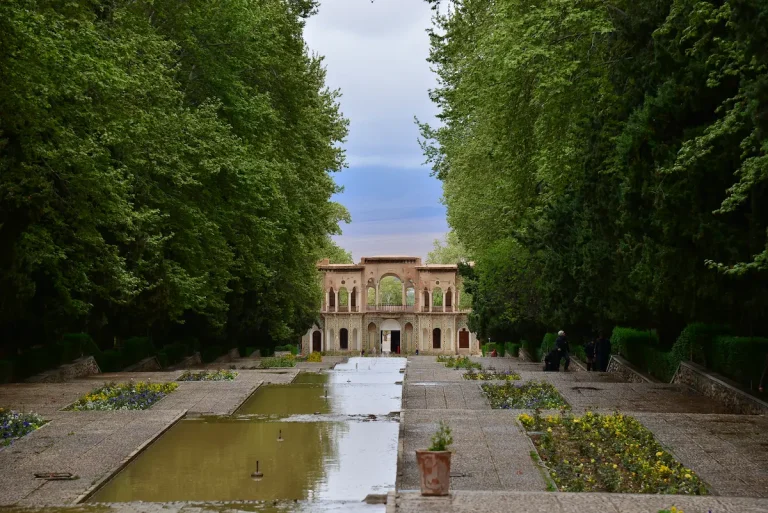
The artistry of an Iranian garden is defined by a set of consistent and elegant parameters. First is the enclosed space, which uses high walls to create a sacred and private sanctuary, separating the peaceful interior from the external world. Second is the central role of water as the lifeblood. Water, channeled from distant sources through ancient qanats, flows through the garden's intricate network of fountains, pools, and streams, providing both a soothing sound and a cooling effect. Third is the geometric design, most famously the Chahar Bagh or "four gardens" layout, which creates a symmetrical and highly organized space, symbolizing a perfect, divine order. Finally, the gardens are characterized by their symbolic vegetation, with evergreens like the cypress representing immortality, and a central pavilion (kushk), a peaceful structure for contemplation and rest that acts as the garden's soul. These parameters work in harmony to transform a simple space into an enduring symbol of harmony, life, and beauty.
Persian Garden Design: The Mastery of Geometry and Water
The genius of the Iranian gardens lies not only in their beauty but in the masterful engineering and symbolic language embedded within their very structure. Every element, from the central water channel to the specific type of tree, is meticulously placed according to a cosmic and mathematical ideal. This deliberate order is the key distinction of Persian gardens—they are not wild or naturalistic; they are highly controlled, geometrical interpretations of paradise brought to life through human skill. Understanding this design philosophy transforms a casual visit into a profound appreciation of human-environment interaction, showcasing the technical brilliance behind every Persian garden.
The Chahar Bagh: The Four-Part Template of Paradise
The foundational principle of almost every classical Persian garden is the Chahar Bagh (literally "Four Gardens") layout, an ancient blueprint that dictates perfect symmetry and order. This design divides the entire enclosed space into four equal quadrants by two intersecting axes—the central waterways and pathways. Symbolically, this division represents the four elements (water, earth, air, and fire) or the four rivers of paradise mentioned in Zoroastrian and later Islamic cosmologies. The crossing point, often marked by a central pavilion (kushk) or a main pool, acts as the garden’s spiritual and physical epicenter, reflecting the axis mundi. This mathematical and theological rigor is what gives Iranian gardens their enduring sense of balance and timeless harmony, defining them as an ultimate form of architectural landscape and a key reason for the global influence of Persian gardens.
The Ingenuity of Water: Qanats and the Flow of Life
In the arid plateau of Iran, the presence of life-giving water is the single most defining feature of these oases. The design relies heavily on the ancient, sophisticated technology of the qanat system—underground aqueducts that channel water from distant mountain springs without losing significant amounts to evaporation. Within the Persian garden, water is not just a utility; it is a feature. It flows through a sophisticated network of canals (juys) often lined with beautiful blue tiles to enhance the visual effect and to create a sense of coolness. The water often cascades down stepped channels called cascades or ab-nama (water views), specifically designed to create a soothing sound (a critical sensory element) and to aerate the water. This controlled, visible movement of water emphasizes the garden’s role as a miraculous sanctuary and a potent symbol of life and purity, making the management of water a high art form unique to Iranian gardens.
Symbolic Vegetation and The Kushk (Pavilion)
The planting scheme in a Persian garden is deeply symbolic, a coded language understood by ancient visitors. The Cypress tree is the most revered, an evergreen that remains upright and green through the harsh winter, symbolizing immortality, permanence, and eternity. It often marks the main axes of the Chahar Bagh. In contrast, fruit trees (like pomegranate, apple, and cherry) represent the transient pleasure and richness of life, alongside roses and jasmine that provide the essential, intoxicating scent of paradise. The Kushk, or central pavilion, acts as the architectural heart, a refuge elevated above the garden. It is strategically positioned to offer the best visual perspective of all four quadrants, ensuring the visitor is constantly immersed in the garden’s symmetry and beauty. It is the spiritual and social focal point, a place for contemplation, rest, and admiring the meticulously crafted order of the paradise it surveys.
The Dawn of Paradise: A Timeline of the First Persian Gardens
The history of Persian gardens is a story that begins over 2,500 years ago, rooted in the foundational principles of the Achaemenid Empire. It was during the reign of King Cyrus the Great, in the 6th century BCE, that the first known archetype of these gardens, the garden at Pasargadae, was created. This was a revolutionary concept: to create a meticulously planned, walled oasis within a vast, untamed landscape. Cyrus's design was not just for aesthetic pleasure; it was a physical manifestation of his kingdom's philosophy of order, harmony, and control over a chaotic world. The creation of this garden marked the birth of a new art form and set the standard for all subsequent Iranian gardens.
These early gardens were a powerful blend of practicality and symbolism. They relied on ingenious irrigation systems, particularly the ancient qanat system, which channeled water from distant mountains to the garden, providing a reliable source of life in an otherwise arid environment. The design of these first Persian gardens was based on the profound principle: the Chahar Bagh, which created a sacred space of perfect balance. This foundational design became the enduring blueprint for all future Iranian gardens. While the original Pasargadae garden now exists only in ruins, its influence cannot be overstated.
Subsequent dynasties refined and elevated the art of Persian gardens. The Safavid era (16th-18th centuries), in particular, saw a flourishing of garden design, notably in their capital, Isfahan, where the gardens transitioned from being purely private spaces to more public, ceremonial avenues like the famous Chehel Sotoun. Later, the Qajar period emphasized ornate architectural structures (kushks) and elaborate tilework within the established geometric framework. The core principles established by Cyrus the Great remain at the heart of every single one, demonstrating that one of the greatest contributions of Persian culture to the world was the very idea of a garden as a place of spiritual and physical perfection.
Global Recognition: Why UNESCO Registered Persian Gardens
The inscription of Persian gardens on the UNESCO World Heritage List in 2011 was a monumental recognition of their profound global significance. This decision was based on their "Outstanding Universal Value," acknowledging that these gardens are far more than beautiful landscapes—they are masterpieces of human creative genius that have had a lasting impact on garden design around the world. The UNESCO committee cited several key reasons for their decision, highlighting why these are not just national treasures but a shared heritage for all of humanity.
One of the primary reasons is their ingenious and masterful adaptation to the arid climate. These Iranian gardens are a testament to human ingenuity in creating a thriving oasis in a desert. They brilliantly utilize a complex system of qanats and channels to bring water from distant sources, a technology that was revolutionary in its time and continues to be admired today. Furthermore, UNESCO recognized their immense influence on garden design across the globe. The principles and design of Persian gardens were exported and adapted, shaping the design of gardens as far away as Spain's Alhambra and India's Taj Mahal. This diffusion of their aesthetic and engineering genius solidified their place as a foundational art form, influencing subsequent Islamic and even European design traditions.
Finally, UNESCO acknowledged their deep cultural and symbolic value. The gardens are a physical representation of the spiritual ideal of paradise (pardis). They are a living tradition, embodying a philosophy of order, beauty, and harmony that is woven into the very fabric of Persian culture. By preserving and recognizing these Iranian gardens, UNESCO is not just protecting historical sites; it is safeguarding a living art form and a spiritual heritage that continues to inspire and captivate people around the world.
Why Persian Gardens Captivate Travelers: A Unique Experience
For a traveler, the allure of Persian gardens lies in their powerful blend of the unexpected and the deeply familiar. Many visitors arrive in Iran with images of arid deserts and grand historical monuments. The discovery of a lush, meticulously planned garden in the middle of a hot, dry landscape is a moment of pure magic, a beautiful and surprising contrast that immediately captures the imagination. These gardens are more than just green spaces; they are an oasis for the senses, providing a tranquil refuge from the urban bustle and the heat of the sun. The gentle, rhythmic sound of running water, the soothing cool air drawn off the pools, and the beautiful symmetry of the design create a profound sense of peace. This sensory retreat is a key reason why Persian gardens are so revered.
Beyond their physical beauty, the true appeal of Iranian gardens lies in their cultural and spiritual depth. These spaces are not just historical sites; they are a living symbol of Persian culture. The concept of paradise, a perfectly ordered sanctuary, is woven into every detail, from the symbolic cypress trees representing eternity to the four-part design reflecting cosmic order. For a traveler, walking through a Persian garden is a chance to connect with a timeless philosophical tradition and see a living reflection of the Iranian soul, offering a contemplative, almost Zen-like experience. They offer a quiet, beautiful experience that is fundamentally different from a tour of historical ruins. Ultimately, Persian gardens are so captivating because they offer a rare and perfect combination of stunning natural beauty, brilliant human ingenuity, and a deep, spiritual connection to the very heart of the land.